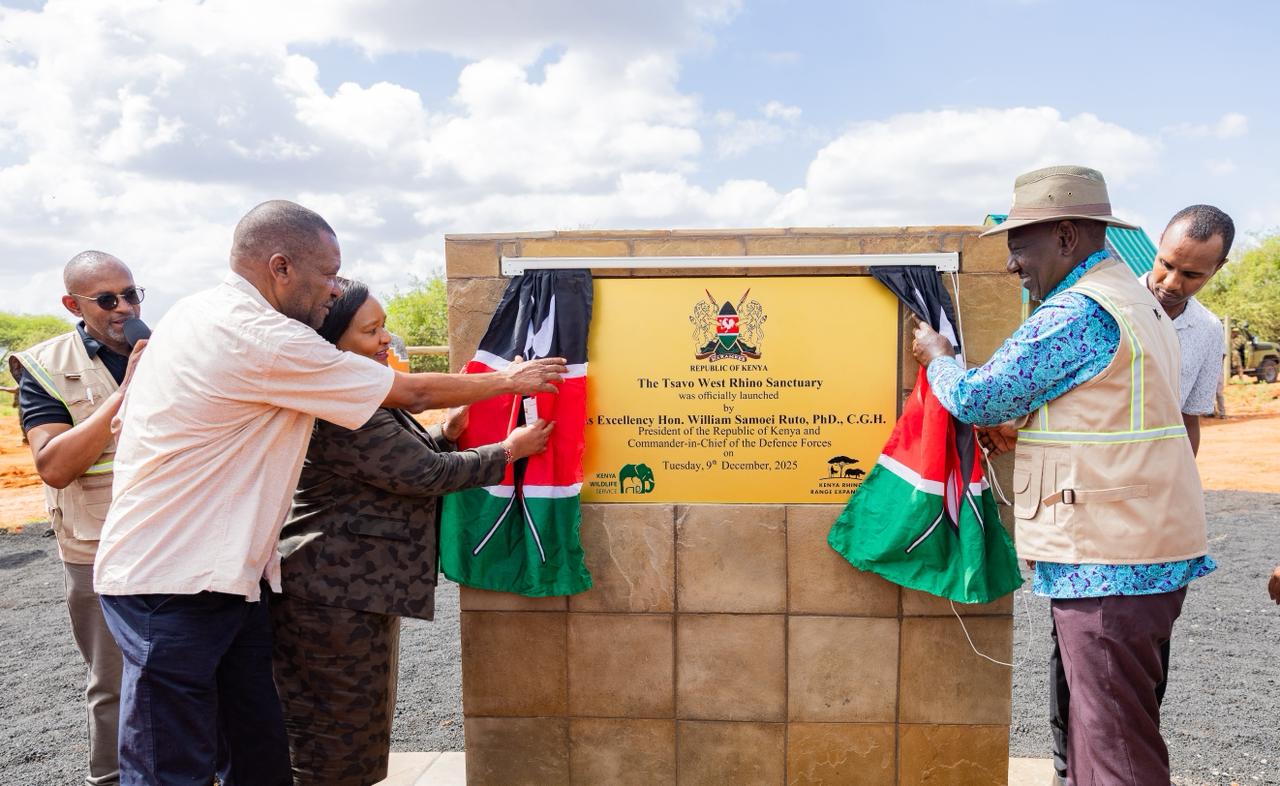
President William Ruto has officially inaugurated the expanded Tsavo West Rhino Sanctuary in Taita Taveta County, creating the world’s largest black rhino sanctuary and consolidating 200 rhinos into a single founder population.
The sanctuary, covering more than 3,200 square kilometers, brings together 150 rhinos from Ngulia and 50 from the Tsavo West intensive protection zone.
“Across Kenya, more than 80% of our black rhinos live in overstocked sanctuaries, limiting our ability to grow our national herd. Today, we correct that mistake,” President Ruto said, underscoring the sanctuary’s importance for both national and continental conservation efforts.
The expansion addresses overcrowding in smaller sanctuaries such as Ngulia Rhino Sanctuary, which covers only 92 square kilometers but houses nearly 150 rhinos—more than double its intended capacity. This congestion had intensified territorial conflicts, reduced survival rates, and placed the rhinos under severe ecological stress.
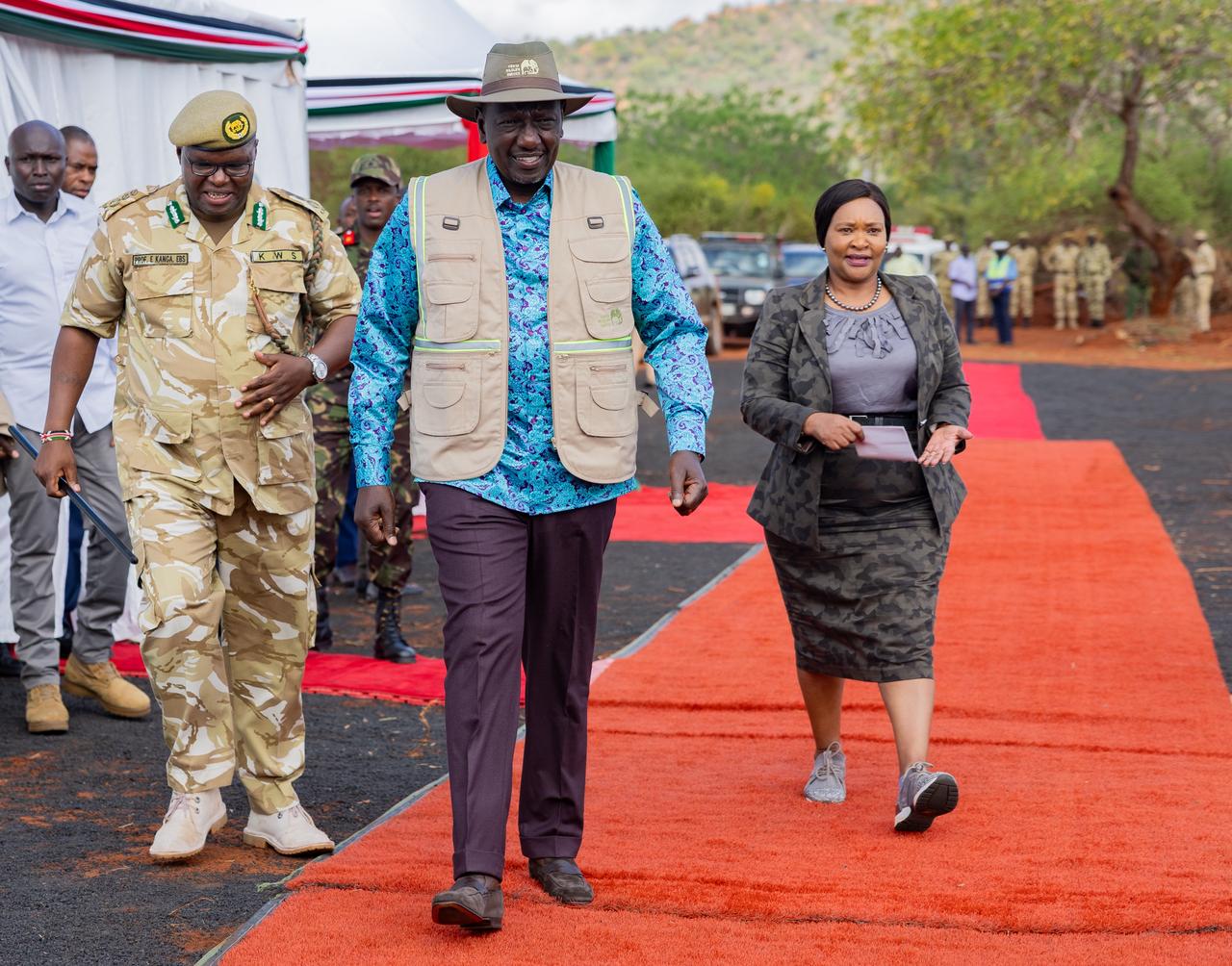 President William Ruto, Tourism CS Rebecca Miano (L), and Kenya Wildlife Service (KWS) Director General. Erastus Kanga during the official launch of the Tsavo West Rhino Sanctuary on December 9, 2025. PHOTO/PCS
President Ruto noted that Tsavo historically supported over 8,000 black rhinos in the 1970s, but poaching, drought, and land pressures had reduced the population to fewer than 20 by 1989.
“The establishment of the Wildlife Service decades ago helped curb these threats, and today Kenya is restoring Tsavo as a continental stronghold for black rhinos,” he said.
To protect the sanctuary, the government has deployed AI-enabled cameras, drones, encrypted radio networks, patrol vehicles, and over 300 security personnel.
Additionally, 40 ranger houses, operational bases, 250 kilometers of upgraded fencing, access roads, and water infrastructure have been developed.
“We conducted the largest rhino monitoring and tagging exercise ever undertaken. Ninety rhinos were safely immobilized, and 89 fitted with modern tracking devices and digital identifiers, allowing real-time monitoring of their movement, health, and security,” President Ruto said.
Beyond conservation, the sanctuary is boosting local economies by creating jobs in ranger deployment, surveillance, construction, fencing, and logistics, while supporting local businesses, transport services, and tourism.
By 2030, it is projected to generate over $45 million (Sh5.2 billion) and create more than 18,000 jobs. “Conservation must work for the people. Communities are not spectators but active stakeholders in Kenya’s green future,” President Ruto emphasized.
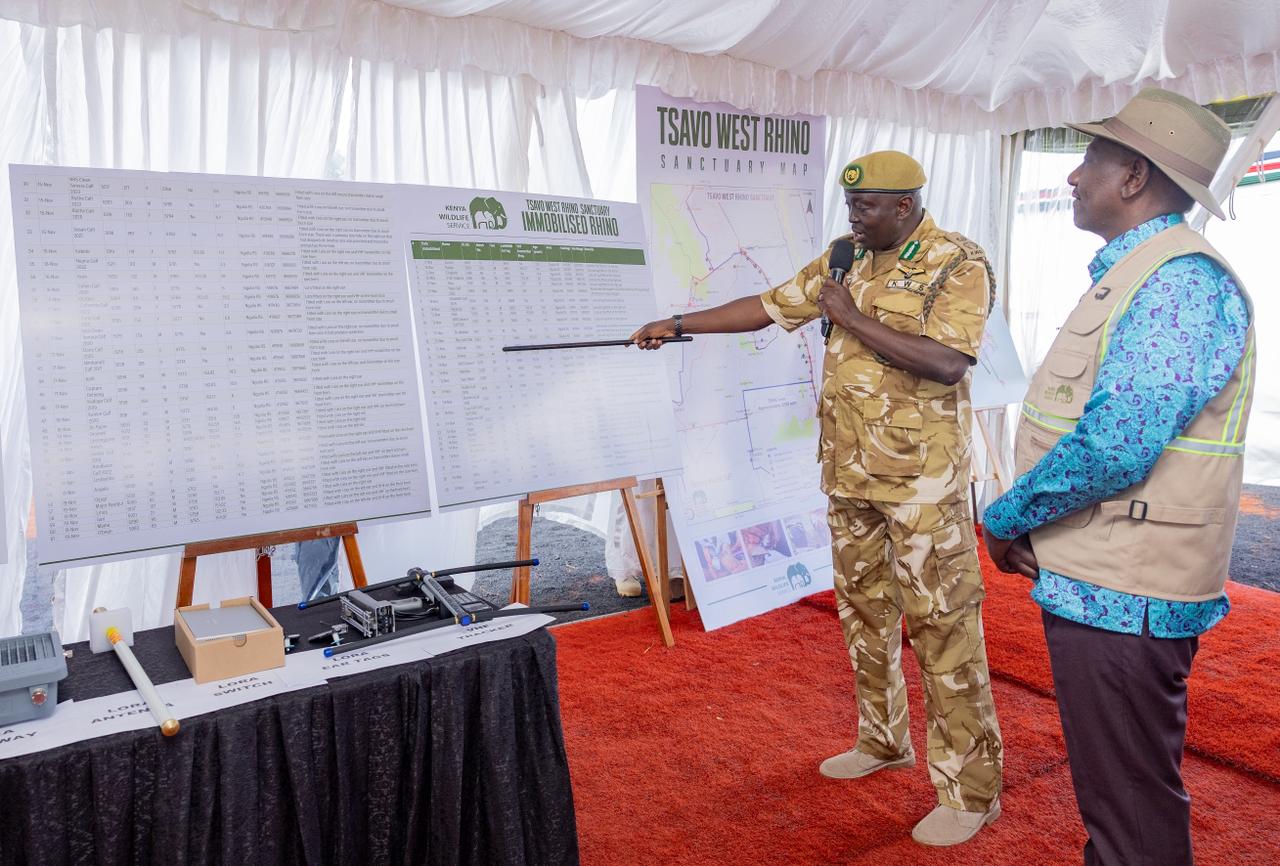 President William Ruto views wildlife data during the official launch of the Tsavo West Rhino Sanctuary on December 9, 2025. PHOTO/PCS
With improved security, expanded space, and better population management, Kenya aims to raise the national black rhino population growth rate from 5% to 8% annually, targeting 1,450 rhinos by 2030 and 2,000 by 2037.
The country currently hosts approximately 2,100 rhinos, including 1,060 black rhinos and 1,040 southern white rhinos, holding nearly 78% of the global Eastern black rhino population.
The launch marks a milestone in Kenya’s conservation efforts, demonstrating a commitment to protecting endangered species while promoting economic growth and community engagement.